Blog

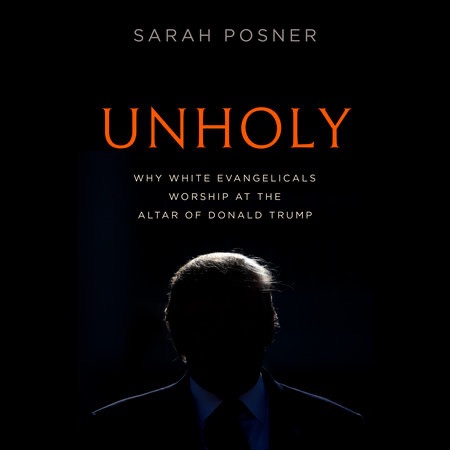
  • Unholy by Sarah Posner — A Chilling Blueprint of Faith, Power, and Radicalization

    Sarah Posner doesn’t write like someone guessing at the heart of America’s religious right—she writes like someone who has been taking notes from the inside. Unholy is not just a chronicle of how Donald Trump rose to power. It’s an exposé of the alliance between white Christian nationalists and a figure many once considered morally irredeemable by evangelical standards. And it reads like a warning shot: the threat didn’t end in 2020—it metastasized.

    A Match Made in…Well, Not Heaven

    We’ve heard the phrase “strange bedfellows” used to describe Trump and evangelicals, but Posner argues that this wasn’t a shotgun marriage of political convenience. It was a union decades in the making.

    Through meticulous research and a deep understanding of the religious right’s rhetoric, Posner lays out how Christian nationalism has long been working to place itself at the center of American politics. Trump, with his authoritarian instincts, dog-whistle racism, and strongman image, simply fit the mold of what many in this movement were waiting for—even if he couldn’t quote a Bible verse to save his life.

    But here’s the thing: this wasn’t hypocrisy. It wasn’t evangelicals “holding their noses” to vote for Trump. Posner shows that it was ideological synergy.

    From Moral Majority to MAGA

    Posner traces this convergence back to the early culture wars—the days of Jerry Falwell’s Moral Majority and Pat Robertson’s political ambitions. What becomes clear is that this movement never really cared about morality in the conventional sense. It cared about power. And the Trump era represented a golden opportunity to wield it without apology.

    She connects the dots between televangelists, think tanks, and political operatives who used “religious liberty” as a shield for discrimination and “family values” as a smokescreen for authoritarian control. That may sound like a conspiracy theory—but Posner’s sourcing is robust, and her argument is grounded in documented speeches, campaign strategies, and policy outcomes.

    And it’s not just domestic. She digs into how many of these religious nationalists aligned themselves with global authoritarian figures—Putin being the most notable—seeing them as defenders of “Christian civilization” against secularism and progressive values.

    The Prosperity Gospel and the Cult of the Strongman

    One of the most compelling parts of the book is how Posner explores the role of the prosperity gospel in Trump’s appeal. Figures like Paula White, a spiritual adviser to Trump, built their ministries on the idea that wealth and power are signs of divine favor. In this world, Trump isn’t a sinner to be pitied—he’s a modern-day King Cyrus, chosen by God to lead, flaws and all.

    This theology merges seamlessly with authoritarianism. It sanctifies strength. It blesses domination. And it makes cruelty seem like divine justice. When Trump enacted harsh immigration policies or dismissed racial justice movements, these acts weren’t seen as moral failings—they were celebrated as God’s will being done.

    This might be the most disturbing takeaway of Unholy: cruelty isn’t the cost of this political theology. It’s the point.

    When the Wall Between Church and State Collapses

    For anyone hoping that Trump’s evangelical support would fade with his presidency, Posner offers no such comfort. She shows how white Christian nationalism has embedded itself in school boards, state legislatures, and the judiciary. The infrastructure is there. The playbook is written. The ambition goes far beyond electing a president—it’s about reshaping the nation into a theocratic state where dissent is treated as blasphemy.

    And let’s be clear—this isn’t about belief in God or faith as a personal or communal value. This is about weaponizing religion for political dominance. It’s about enforcing a narrow interpretation of Christianity through law and policy, all while claiming persecution any time someone pushes back.

    The Devastating Legacy

    The subtitle isn’t just a flourish. Posner dedicates the latter sections of Unholy to unpacking the real-world consequences of this political-religious union. From the rollback of reproductive rights to the targeted suppression of minority voters, the damage is not theoretical—it’s already here.

    She also explores how misinformation, conspiracy theories, and Christian media ecosystems created an alternate reality for millions of Americans. The result? A public that believes Trump was anointed by God, that public health measures are tyranny, and that violence in the name of “saving America” is not just justified—it’s holy.

    What Worked — Posner’s Strengths

    • Reporting with Teeth: Posner isn’t afraid to name names. She backs her claims with interviews, documents, and public records. You get the sense that she’s not speculating—she’s been tracking this for years.

    • Clear Moral Compass: She doesn’t pretend to be neutral, but she also doesn’t come off as hysterical. Her tone is urgent but grounded in fact.

    • Historical Context: The history she weaves into the book shows that this didn’t come out of nowhere. She helps the reader understand how we got here—and what it might take to get out.

    Where It Falters

    The only real critique—if we’re being picky—is that Unholy can feel overwhelming at times. There’s just so much. So many players. So many connections. The web Posner exposes is dense, and some readers might wish for more narrative breaks or digestible summaries. A few chapters dive so deep into the machinery that the emotional core of the story gets buried under the weight of information.

    But honestly, that’s also a testament to how widespread and insidious this movement is. If anything, the density mirrors the reality.

    Final Thoughts — Read This With Eyes Wide Open

    Unholy is a sobering read. It doesn’t end with a tidy resolution or offer easy answers. Instead, Posner leaves us with a mirror—one that reflects a country at war with itself, torn between democracy and dominionism.

    If you’re trying to understand how we got here, why the Christian right’s influence seems stronger than ever, and why so many Americans see political violence as God’s work, this book is required reading.

    It’s not hopeful. But it’s honest. And right now, that’s more useful than comfort.

    Want to listen instead of read? Grab your FREE trial of Audible and get Unholy as your first audiobook:

    Start your free Audible trial here

    Disclosure: This post contains affiliate links. If you sign up for a free Audible trial or make a purchase through these links, I may earn a small commission at no extra cost to you. This helps support my work and allows me to keep providing book recommendations. Thank you for your support!

    Your turn:

    What do you think—is Christian nationalism a passing phase or a permanent political force? Have you seen evidence of this movement in your own community? Let’s talk in the comments.
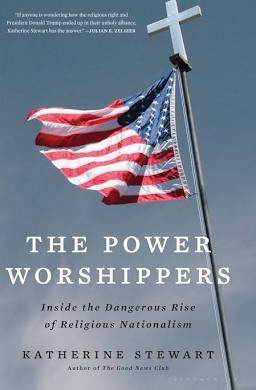
  • The Power Worshippers by Katherine Stewart – A Wake-Up Call We Didn’t Know We Needed

    Some books gently tug you toward an uncomfortable truth. The Power Worshippers grabs you by the collar and drags you to the front row of a fire-and-brimstone sermon you didn’t ask for—but desperately need to hear.

    Katherine Stewart isn’t just writing about the rise of the religious right. She’s dissecting a movement that cloaks itself in the language of faith while strategically reshaping American democracy from the inside out. And spoiler alert: it’s not about church on Sundays or the Ten Commandments in courthouses. It’s about raw, calculated political power.

    Not Your Grandma’s Culture War

    At first glance, you might think this is another book about the usual suspects: abortion, prayer in schools, same-sex marriage. But Stewart’s core argument is more sobering. The religious right isn’t simply reacting to social changes—it’s actively building a theocratic political machine. And it’s doing it with precision.

    She traces how evangelical leaders, Catholic traditionalists, and opportunistic politicians have formed a coalition that’s less about spiritual revival and more about reshaping the U.S. into a nation governed by “biblical law” as they define it. That’s not hyperbole—it’s the expressed goal of many of the movement’s architects, and Stewart backs this up with chilling documentation.

    Behind the Pulpit, a Political Strategy

    One of the most eye-opening parts of the book is how methodical this movement is. Stewart takes readers deep into training conferences, voter mobilization workshops, and church-based political organizing efforts that make most mainstream campaign strategies look amateurish by comparison.

    Take Project Blitz, for instance. It’s a lesser-known legislative playbook designed to push religion-infused laws at the state level. It begins with feel-good bills—like requiring “In God We Trust” in public buildings—but then moves to legislation that subtly chips away at LGBTQ rights, public education, and reproductive freedoms. It’s Trojan horse politics with a choir robe on.

    Stewart also dives into the world of “biblical capitalism,” where faith is fused with free-market ideology and deregulation is treated as divine will. Churches aren’t just offering Sunday service anymore—they’re teaching Christian nationalism in economics, civics, and law.

    Meet the Power Players

    This book doesn’t shy away from naming names. From pseudo-intellectual think tanks to mega-church pastors-turned-political kingmakers, Stewart maps a web of influence that’s as vast as it is sobering.

    You’ll come across familiar figures—Ralph Reed, Tony Perkins, and the late R.J. Rushdoony—but you’ll also meet the behind-the-scenes strategists shaping everything from judicial appointments to education reform. Many of these players aren’t household names, which makes their impact even more unnerving.

    Stewart’s reporting shines here. She attends events, interviews movement leaders, and combs through reams of publications the rest of us would never bother to read. That dedication allows her to connect dots that are often missed in surface-level reporting.

    Faith as a Weapon, Not a Belief System

    One of the book’s more powerful insights is how the movement distorts religion itself. The spiritual diversity of American Christianity—progressive, moderate, liberationist—is dismissed or outright demonized. If you’re not aligned with their brand of “biblical values,” you’re not just wrong; you’re ungodly, dangerous, even un-American.

    This isn’t about theology. It’s about identity politics weaponized through scripture. And that’s what makes it so effective. The movement doesn’t need to convince the majority. It just needs to mobilize a passionate minority who believe their faith demands political domination.

    Stewart shows how this ideology thrives on grievance. It tells followers they’re under siege—even as their leaders wield enormous power. It transforms legitimate pluralism into a threat and sells authoritarianism as religious freedom.

    What Makes This Book Different

    There are plenty of books about the rise of the Christian right. What makes The Power Worshippers stand out is its calm, investigative voice paired with a deep understanding of both religious culture and political structures.

    Stewart doesn’t sneer at believers. She’s not mocking religion. In fact, she seems genuinely empathetic to people of faith who are watching their traditions hijacked by hardline ideologues. Her critique is laser-focused on the machinery of political power—and how religion is being used as its engine.

    This level-headed tone makes her conclusions all the more damning. There’s no firebrand rhetoric here. Just clean, precise journalism and a message that’s impossible to ignore.

    Any Weak Spots?

    If there’s a weakness in the book, it’s one of scope rather than substance. Stewart’s reporting is so detailed and sweeping that at times, you can feel overwhelmed by the sheer volume of information. She jumps between state legislatures, think tanks, pastors, lobbyists, and historical context in rapid succession. That’s not a flaw in her writing—it’s a reflection of the topic’s complexity—but readers new to the subject might need to take breaks to digest everything.

    Also, while Stewart is excellent at diagnosing the problem, she doesn’t offer many concrete solutions. But then again, maybe that’s not the job of journalism. The real value here is awareness—and once you see the scope of what’s happening, you can’t unsee it.

    Why This Book Matters Now

    With the 2024 election still casting a long shadow and the Supreme Court tilting ever more conservative, The Power Worshippers lands like a flare gun in the night. Stewart helps us understand that the culture wars aren’t random. They’re not spontaneous uprisings from the grassroots. They’re the result of decades of planning, financing, and strategic infiltration.

    This isn’t a conspiracy theory. It’s political organizing—and it’s working.

    The courts. The schools. The laws. The very definition of who “counts” as a real American—this movement has plans for all of it. And if you think we’re heading toward a theocracy, you’re not paranoid. You’re just paying attention.

    Final Take

    Katherine Stewart has written a book that feels less like a warning and more like a mirror. The movement she documents isn’t a fringe anomaly. It’s a deeply rooted, well-funded campaign to turn America into a Christian nationalist state—and it’s happening in plain sight.

    If you’re someone who values democracy, religious freedom (in the truest sense), or just wants to understand why your school board election suddenly turned into a culture war battlefield, read this book.

    And read it soon.

    Free Audible Trial: Want to listen to The Power Worshippers on the go? Start your free Audible trial here and get the audiobook for free.

    Disclosure: This post contains affiliate links. If you sign up for a free Audible trial or make a purchase through these links, I may earn a small commission at no extra cost to you. This helps support my work and allows me to keep providing book recommendations. Thank you for your support!

    What do you think?

    Have you seen signs of Christian nationalism in your community? How do you think religion and politics should coexist—if at all? Let’s talk about it in the comments.

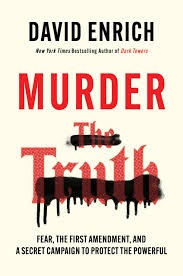
  • Book Review: Murder the Truth by David Enrich

    When the Rich Don’t Like the Truth, They Don’t Deny It—They Sue It to Death

    I didn’t expect this book to get under my skin. I thought I was picking up another well-written takedown of Trump’s war on the media—you know, fact-checking, ego, the usual chaos. But Murder the Truth turned out to be something more serious. More intimate. Scarier, even.

    Because this isn’t just a book about politics. It’s a book about power—who controls truth, and what happens when truth becomes a liability.

    David Enrich, who’s a seasoned editor at The New York Times, pulls back the curtain on the quiet, calculated war being waged against journalists in America. Not the screaming headlines or Twitter tantrums kind of war. The kind that happens in legal briefs, bank transfers, and boardrooms. The kind that works.

    Truth Doesn’t Die Loudly—It Gets Bled Out in Court

    The first few chapters build slowly, maybe too slowly if you’re impatient, but then Enrich hits you with the legal equivalent of a gut punch: the strategy to dismantle New York Times v. Sullivan—that 1964 ruling that’s been the lifeline for investigative journalism for over half a century.

    That ruling basically says that if you’re a public figure, you can’t sue a journalist for defamation unless you can prove actual malice. In other words, the journalist had to knowingly lie or recklessly disregard the truth. It’s a high bar for a reason. It’s what lets people report on the rich and powerful without being bankrupted by lawsuits.

    But now? That protection is hanging by a thread. And there are people with enough money, motive, and Supreme Court access to start snipping.

    Trump, Thiel, and the Lawsuit as a Weapon

    This isn’t just a Trump book. He’s here, of course, and his quotes are as venomous as you’d expect (“we’re going to open up the libel laws,” etc.), but Enrich wisely doesn’t make him the sole villain.

    He zeroes in on people like Peter Thiel, who didn’t just sue Gawker—he funded Hulk Hogan’s lawsuit in secret, as revenge for being outed as gay. The result? Gawker was destroyed. Not because it lied, but because it couldn’t afford the fight.

    And that’s the point Enrich keeps driving home: truth isn’t enough if you can’t afford to defend it.

    Lawsuits are becoming tools of vengeance, intimidation, and reputation management. Enrich shows how billionaires and politicians alike are using them to bleed out journalists—financially, emotionally, and professionally. And most of the time? It’s working.

    Clarence Thomas and the Loaded Gun on the Supreme Court’s Shelf

    One of the most disturbing parts of the book—at least for me—was reading how Supreme Court justices are laying the groundwork to gut Sullivan. Clarence Thomas has already written that he wants it overturned. Neil Gorsuch is openly questioning its usefulness.

    Think about that. We could be one or two cases away from a legal environment where journalists can be sued for reporting uncomfortable truths. Not falsehoods—just truths that inconvenience someone powerful.

    Enrich doesn’t scream about this. He lays it out quietly, factually. Which somehow makes it worse.

    The Stories Inside the Story

    Enrich threads in case after case of journalists—some famous, some obscure—who’ve been targeted by lawsuits not because they got the story wrong, but because they got it right. And that scared someone.

    He tells these stories with compassion but never melodrama. There’s a kind of steady anger underneath it all. The kind of anger that comes from watching your colleagues get crushed while the public shrugs because hey, “fake news,” right?

    One story that stuck with me involved a local paper getting sued into near-collapse for reporting on a city official’s shady land deals. It wasn’t a splashy national headline. Just a community paper trying to do its job. And that job cost them everything.

    Is It a Perfect Book? No. But It Hits Where It Counts.

    There are moments where Enrich gets bogged down in legal history. A few chapters feel more like a law school lecture than a narrative. But to be honest, I needed the context. And I appreciated that he trusted readers to sit with the complexity.

    He doesn’t offer easy answers. He doesn’t end with a call to action or a policy platform. This is not that kind of book.

    What he offers is clarity. And maybe even urgency. The kind that makes you think twice the next time someone shrugs and says, “the press is the enemy.”

    Who This Book Is For

    If you’re a journalist, obviously, this is required reading. But it’s also for anyone who cares about democracy—not in a performative, bumper-sticker way, but in a nuts-and-bolts way.

    If you’ve ever asked, “Why doesn’t the media report on X?” this book might help you understand why: fear, cost, and silence bought with cash and lawsuits.

    It’s for readers who value independent reporting, yes—but also for readers who think critically, who want to know how power functions when it’s too smart to be loud.

    Final Take: 4.7 Stars

    This isn’t a comfortable book. It’s not supposed to be. But it’s necessary.

    Murder the Truth peels back the illusion that press freedom is permanent. It’s not. It’s negotiated, case by case, in rooms you and I will never see. Enrich gives us a glimpse inside—and it’s not pretty.

    What scares me most isn’t the lawsuits. It’s how effective they’ve already been. And how few people seem to notice.

    Want the audiobook?

    You can listen to Murder the Truth free with an Audible trial

    FTC Disclosure: This post contains affiliate links. If you sign up or purchase through them, I may earn a small commission at no extra cost to you. Every click helps support independent reviews like this.

    Your Turn

    Do you think the press is still free in America? Or is the threat of litigation already shaping what gets reported—and what doesn’t?

    Drop your thoughts below. I’m curious how you’re seeing this play out in your world.

  • Book Review: Homeland: The War on Terror in American Life by Stuart Schrader

    There’s a moment early in Homeland: The War on Terror in American Life when you realize Stuart Schrader isn’t just talking about post-9/11 America—he’s peeling back the wallpaper of an entire house we’ve lived in for decades. This book isn’t just about the War on Terror. It’s about the quiet machinery behind it. The laws, the logic, the training manuals. The global exports and the neighborhood patrols. Schrader’s central thesis hits like a gut punch: The domestic and foreign arms of U.S. security are not separate—they’re Siamese twins, nurtured in tandem through generations of empire-building disguised as public safety.

    And if that makes you squirm a little? Good. That’s the point.

    A Different Kind of Homeland

    Let’s start with what this book isn’t. It’s not a partisan hit piece. It doesn’t spiral into conspiracies. And it’s not particularly interested in the shock-and-awe headlines of war or terrorism. Instead, Schrader pulls back the lens to show how the very idea of “homeland security” was built atop decades of police training programs, racialized surveillance, and overseas counterinsurgency.

    Long before 9/11, the U.S. was exporting its style of militarized policing to the Global South—particularly during the Cold War—while simultaneously importing lessons from those engagements to toughen its own domestic law enforcement. This boomerang effect, as Schrader calls it, blurs the lines between soldier and cop, between battlefield and neighborhood. The War on Terror, in this light, wasn’t a rupture in American policy—it was a continuation.

    The result is a haunting realization: what we often see as national security “responses” to terrorism are more accurately described as pre-existing tools, waiting in the wings, now rebranded for a new era.

    The Architecture of Control

    Schrader’s research is dense but rewarding. He charts the rise of institutions like the Office of Public Safety (OPS), which trained foreign police in counterinsurgency tactics—ostensibly to fight communism—but often ended up enabling state violence and repression. These same tactics, he argues, were later refined and deployed at home, especially in marginalized communities.

    This isn’t abstract theory. Schrader connects the dots between Cold War police training in Vietnam or Latin America and today’s urban policing strategies in Baltimore, Los Angeles, and beyond. The roots of SWAT teams, for instance, stretch back to counterinsurgency tactics abroad. Community surveillance? Often modeled on strategies developed in occupied territories.

    What’s chilling isn’t just the overlap—it’s the seamlessness. No dramatic turn, no policy about-face. Just a steady evolution, hidden in plain sight.

    Who Gets Protected?

    Schrader is unsparing in his critique of racialized policing. The book lays bare how Black and brown communities have long been treated as internal enemies—subject to surveillance, force, and control that mirrors what we see in occupied foreign zones. The idea of the “ghetto” as a zone requiring pacification mirrors Cold War doctrines of insurgency.

    After 9/11, this structure didn’t change—it simply expanded. Muslim Americans became targets of surveillance, much like civil rights activists and Black radicals had been before them. Schrader notes that this isn’t mission creep—it’s the mission.

    He also reminds us that the beneficiaries of all this security aren’t necessarily everyone. They’re the people who have always been protected: white, middle- to upper-class Americans, particularly those whose idea of safety aligns with control, not freedom.

    The Policy Boomerang

    One of the book’s most compelling ideas is what Schrader calls the “boomerang effect.” It’s the feedback loop through which U.S. counterinsurgency methods developed abroad eventually return home to shape domestic policing.

    Think of it this way: If you teach a military force in El Salvador to suppress dissent through curfews, informants, and overwhelming force, and then bring that same framework back to L.A., what happens? You get militarized policing. You get neighborhoods treated like occupied territory. You get “stop and frisk,” predictive policing, and “broken windows” strategies that criminalize poverty.

    This isn’t theoretical. Schrader shows how the same personnel often move between foreign assignments and domestic policing programs. The knowledge transfer is direct, intimate, and largely unexamined by the public.

    Bureaucracy as a Weapon

    A running theme in Homeland is the banality of empire. Forget secret cabals or shadowy coups—Schrader shows us how the architecture of oppression is built by committees, memorandums, training programs, and budget allocations.

    There’s a kind of horror in how boring it all is. Security becomes routine, standardized, institutional. Bureaucrats make decisions that affect millions, all in the name of “efficiency” or “readiness.” But behind those decisions lie profound questions of democracy, justice, and who gets to feel safe.

    Schrader’s deep dive into federal agencies like the Department of Justice and their partnerships with local police departments reveals how systemic this entrenchment is. Once funding flows into militarized training, there’s no incentive to question its purpose—it becomes self-justifying.

    A Sobering Look at Reform

    For those hoping for a tidy conclusion or policy checklist at the end, Schrader offers no easy answers. In fact, Homeland ends on a deliberately uneasy note. If the War on Terror is an extension—not an aberration—of America’s historical policing practices, then reforming the system may require more than new oversight or body cameras.

    It might demand a fundamental rethink of what “security” even means.

    Can a system built on racial control and imperial logic be rehabilitated? Or does it need to be dismantled and reimagined entirely? Schrader doesn’t offer a prescription, but he makes it clear: returning to some mythical pre-9/11 normalcy isn’t the goal. That “normal” was already broken.

    Strengths: Laser Focus, Relentless Connections

    The brilliance of Schrader’s work lies in his refusal to compartmentalize. This isn’t just a book about policing, or about foreign policy, or about race—it’s about all of them at once. And he shows, again and again, that you can’t truly understand one without the others.

    His archival work is meticulous. His storytelling, while academic at times, is surprisingly engaging for such heavy material. He lets historical detail do the talking, which makes the revelations all the more powerful.

    And perhaps most importantly, Schrader never loses sight of the human stakes. While the book is policy-heavy, it constantly reminds us that behind every policy is a lived reality: someone stopped on the street, someone surveilled, someone disappeared.

    Weaknesses: Dense and Demanding

    Let’s be real—this book isn’t light reading. It’s packed with acronyms, bureaucratic history, and geopolitical nuance. If you’re coming in expecting a fast-paced narrative or a memoir-style exposé, you might find yourself bogged down.

    There are moments when the prose feels more suited to a dissertation than a general audience. The pacing can drag, particularly in sections heavy with administrative detail. Readers unfamiliar with Cold War history or federal agency structures might need to pause and reorient.

    That said, for those willing to invest the time, the payoff is enormous.

    Why This Book Matters Now

    In a post-George Floyd, post-January 6, post-Patriot Act world, the questions Schrader raises feel urgent. As debates rage over police funding, surveillance, and the boundaries of state power, Homeland offers a long-view context that’s sorely missing from the headlines.

    It forces us to ask: What if the problem isn’t just a few bad cops or a broken foreign policy? What if the whole system is doing exactly what it was designed to do?

    And once you see it, you can’t unsee it.

    Final Verdict

    Homeland: The War on Terror in American Life is a powerful, disturbing, and essential read. Stuart Schrader doesn’t just document the rise of the security state—he exposes its roots, its reach, and its reckoning. This is a book that will challenge your assumptions, deepen your understanding, and—if you let it—radically shift how you see the world around you.

    Is it a comfortable read? Absolutely not. But it’s one of the most important books I’ve read on American power in a very long time.

    Rating: 9.5/10

    Want to hear it instead? Try the audiobook version of Homeland for free with this Audible trial link.

    Disclosure: This post contains affiliate links. If you sign up for a free Audible trial or make a purchase through these links, I may earn a small commission at no extra cost to you. This helps support my work and allows me to keep providing book recommendations. Thank you for your support!

    What do you think?

    Have you read Homeland? Did it challenge your perspective on domestic security or foreign policy? Let’s talk in the comments—I’d love to hear your take.

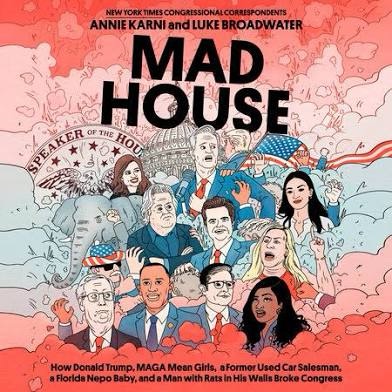
  • Mad House by Annie Karni & Luke Broadwater: A Portrait of Power, Pettiness, and the Fall of the People’s House

    Let’s get this out of the way: if you came to Mad House looking for subtlety, you’ve got the wrong title. That subtitle alone—How Donald Trump, MAGA Mean Girls, a Former Used Car Salesman, a Florida Nepo Baby, and a Man with Rats in His Walls Broke Congress—tells you almost everything you need to know about the tone. It’s bold, biting, and not particularly interested in decorum.

    But here’s the kicker: behind the absurdity lies a well-reported, deeply unsettling chronicle of how the United States House of Representatives descended into dysfunction—not just once, but repeatedly. Mad House is less a political tell-all and more a field report from inside the crater of an imploding institution. It’s an autopsy on accountability, and the results are grim.

    Who’s Behind It?

    Annie Karni and Luke Broadwater are not firebrand columnists or partisan bomb-throwers. They’re veteran congressional reporters—Karni with The New York Times, Broadwater with The Washington Post—and it shows. Their tone, despite the outrageous cast of characters, remains measured, precise, and grounded in fact. What makes Mad House so effective is that it never needs to embellish. The reality is absurd enough.

    What’s It About?

    At its core, Mad House is a study in collapse. It covers the post-2020 era in the U.S. House of Representatives, focusing especially on the Republican caucus as it becomes increasingly ungovernable. The book starts in the aftermath of January 6 and follows the chaotic trajectory through Kevin McCarthy’s speakership (and eventual ousting), the rise of figures like Marjorie Taylor Greene, Matt Gaetz, and Lauren Boebert, and the broader breakdown of institutional norms that once held Congress together—even in times of division.

    There are villains and fools. But the real tragedy lies in how little gets done while America burns. The “madness” isn’t just the personalities. It’s the paralysis.

    Cast of Characters: Dysfunction as Theater

    It’s tempting to call the book a dark comedy. There are laugh-out-loud moments—if only because they’re real and terrifying.

    • Marjorie Taylor Greene is portrayed not just as a conspiracy theorist but as a savvy operator who understands the power of spectacle and uses it to dominate headlines and steer the conversation.

    • Matt Gaetz comes off as a chaotic opportunist—equal parts troll and tactician—willing to wreck his own party to burnish his personal brand.

    • Kevin McCarthy is perhaps the most tragic figure, a man so desperate to wear the crown that he hands out every piece of leverage to get it—and has none left to govern once he does.

    • George Santos—yes, the guy with the mystery past and the alleged financial fraud—gets an entire chapter that reads like an episode of Veep rewritten by Kafka.

    And yet, Karni and Broadwater resist caricature. They let these figures speak in their own words, often quoting directly from speeches, interviews, and leaked recordings. The effect is chilling. These aren’t cartoons. These are real people with legislative power.

    A Broken Process, Not Just Broken People

    What elevates Mad House above mere gossip or palace intrigue is its structural critique. This isn’t just a story about a few bad apples. It’s about how incentives in Congress—and in American politics more broadly—now reward obstruction, outrage, and disinformation.

    Want to raise money? Stir up a culture war.

    Want airtime? Humiliate your own leadership.

    Want to win a primary? Call your opponent a RINO and promise to impeach someone—anyone.

    The book shows how traditional metrics of governance—passing laws, compromising, building coalitions—have been replaced by viral clips, donor emails, and TV hits. The most powerful force in Congress is no longer the Speaker. It’s the social media algorithm.

    McCarthy’s Cautionary Tale

    One of the most revealing arcs in the book is Kevin McCarthy’s brief and tortured reign as Speaker. The authors trace his journey from a shrewd backroom negotiator to a neutered figurehead trying to wrangle an ungovernable coalition.

    McCarthy’s downfall, as depicted here, is almost Shakespearean. He brokers deals with far-right holdouts to secure the gavel, cedes procedural tools, and even opens a doomed impeachment inquiry to placate extremists. None of it works. Gaetz brings the hammer down anyway. Why? Because the chaos helps him more than it helps McCarthy. And that, Mad House argues, is the new logic of the institution.

    McCarthy’s story is also a warning to moderates and institutionalists everywhere: you can’t placate the forces of destruction. You either confront them—or get consumed.

    The Media Mirror

    As congressional correspondents, Karni and Broadwater have a front-row seat to how the media covers this dysfunction—and they’re not afraid to critique their own industry. There are sharp observations about how headline-chasing, both on cable news and in print, often amplifies the very figures who are sabotaging the process.

    They also dissect how members of Congress now run perpetual media operations, turning their offices into content farms. Constituents become secondary. Governance is an afterthought. The job now is to be seen, not to legislate.

    A System in Free Fall

    Beyond the personalities, the book explores how House rules and norms have been eroded to the point of irrelevance. Committee work is undermined. Budget deadlines are ignored. Oversight becomes circus. The authors trace how the once-powerful mechanisms for compromise—bipartisan working groups, “gangs,” backchannel negotiations—have all but vanished.

    One of the most haunting chapters focuses on the debt ceiling standoff. We watch a handful of Republican lawmakers threaten to crater the global economy not out of ideological principle but because they can—and because they might get a Fox News hit out of it.

    This is the “mad house”: not just chaos for chaos’s sake, but chaos as a career path.

    Strengths of the Book

    1. Deep Reporting

    This isn’t secondhand gossip. Karni and Broadwater clearly did the work—interviews, FOIA requests, leaked texts. Every page carries the weight of firsthand sourcing. The footnotes alone are a goldmine for anyone following the ongoing real-world fallout from these events.

    2. Balanced Tone

    Despite the outrageous subject matter, the authors resist the urge to moralize. They present facts, context, and consequences—and trust the reader to connect the dots. It’s the kind of restraint you only get from reporters who’ve been embedded in the story for years.

    3. Dark Humor with a Point

    While the book has moments of levity—how could it not?—it never veers into parody. The absurdity is always grounded in stakes. Laughing at George Santos is one thing. Watching his vote tip the scales on real legislation? That’s not funny at all.

    Weaknesses (and There Aren’t Many)

    The book’s scope, while impressive, is largely confined to the House. That’s intentional, given the title, but readers looking for a broader look at right-wing extremism or dysfunction in the Senate or executive branch may feel there’s more to the story. In that sense, Mad House is a zoomed-in lens—one chamber, one timeframe.

    Also, while the authors make nods to systemic reform (ranked choice voting, campaign finance overhaul), those sections are brief and light on actionable paths. But to be fair, this isn’t a policy manual. It’s a diagnosis. The prescription is someone else’s job.

    Who Should Read This?

    • Political junkies? Absolutely.

    • Casual readers looking to understand what happened to Congress? Even more so.

    • Moderates and conservatives frustrated with the current GOP? This book might sting, but it’s essential reading.

    And for those wondering how things got this bad—Mad House won’t give you a comforting answer. But it will give you clarity.

    Final Verdict: Brutal, Brilliant, and Deeply Disturbing

    Mad House is the book you hand to someone who says, “It can’t be that bad.” It’s a meticulously reported, utterly damning account of what happens when spectacle replaces substance and power is treated as a game. It’s funny until it’s not. Then it’s terrifying.

    Karni and Broadwater don’t just chronicle dysfunction. They name it, dissect it, and place it squarely in front of the American public. Whether we choose to do anything about it is up to us.

    But if the last few years have shown us anything, it’s this: ignoring the madness doesn’t make it go away. It just hands the mic to the loudest voice in the room.

    Want to listen instead? Grab the audiobook for free with a trial of Audible:

    Try Audible Free – Listen to Mad House

    Disclosure: This post contains affiliate links. If you sign up for a free Audible trial or make a purchase through these links, I may earn a small commission at no extra cost to you. This helps support my work and allows me to keep providing book recommendations. Thank you for your support!

    What do you think—can Congress be saved, or are we too far gone? Let’s talk below.

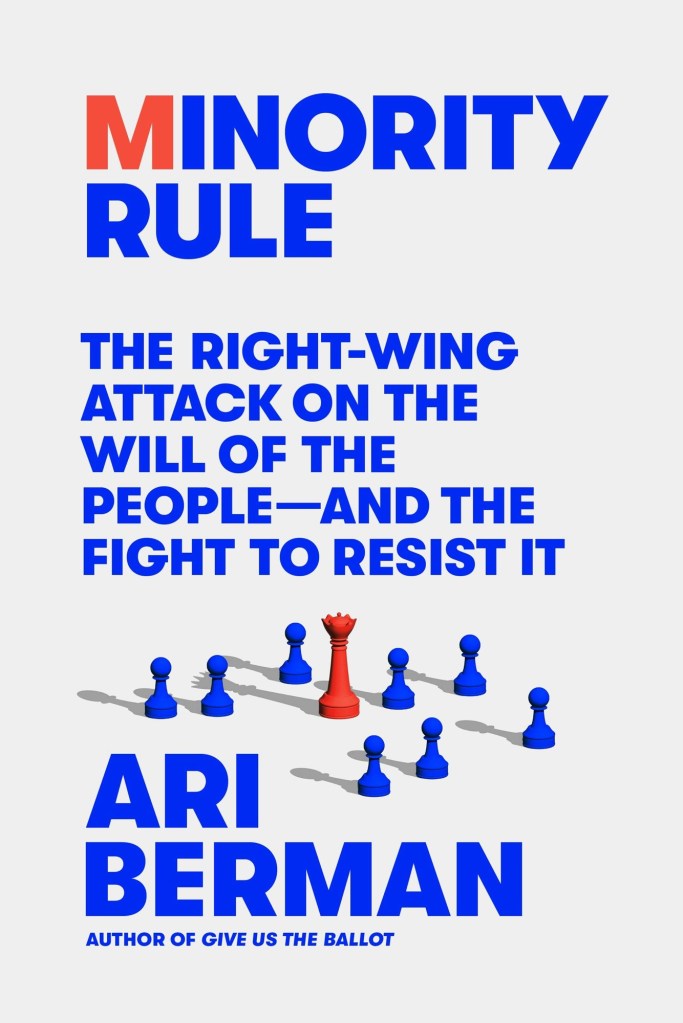
  • Minority Rule by Ari Berman: A Chilling Portrait of Power, Resistance, and the American Vote

    Let’s start with this: Minority Rule isn’t just another political exposé. It’s a gut punch. The kind that leaves you staring at the ceiling long after you close the book, asking yourself—how did we get here? And maybe more urgently—how do we get out?

    Ari Berman, best known for his sharp work on voter suppression in Give Us the Ballot, returns here with a wider lens and a sharper scalpel. This book isn’t about one election, one Supreme Court case, or one bad law. It’s about a decades-long power grab that has warped American democracy—and the ragtag resistance trying to pull it back from the brink.

    Let’s break it down.

    The Thesis: Democracy Under Siege

    At the core of Minority Rule is a sobering argument: a radicalized, reactionary faction of the American right has rigged the system to hold onto power despite being a demographic minority. They’re not hiding it, either. They’re building voter suppression laws, gerrymandering districts, packing courts, and using disinformation as a political strategy. And they’re winning.

    Berman doesn’t paint this as an accident or a historical fluke. He argues it’s intentional—and it’s working exactly as designed.

    He calls it what it is: an assault on majority rule.

    Structure & Style: Journalism Meets Legal Thriller

    The book’s pacing is brisk without feeling rushed. Each chapter centers on a battleground—Georgia, Texas, Wisconsin, Arizona—and Berman weaves in local voices to tell the national story. This isn’t just a parade of politicians and pundits. We meet grassroots activists, disenfranchised voters, and even disillusioned conservatives who watched their party take a hard turn.

    If you’ve read Give Us the Ballot, you’ll recognize Berman’s signature style: clean prose, deep research, and a journalist’s knack for finding the human story inside the policy mess. But Minority Rule goes broader. This isn’t just about voting rights—it’s about the whole machinery of democracy.

    The Machinery of Suppression

    Berman lays out, piece by piece, the structural scaffolding that holds minority rule in place. Here are a few key pillars he dismantles:

    1. Gerrymandering

    Want a masterclass in how to steal elections without touching a single ballot? Berman delivers. He traces how Republicans have used advanced mapping software to draw themselves into permanent power, especially in state legislatures where decisions about abortion, education, and guns are increasingly made.

    Wisconsin is the worst offender. In one election, Democrats won the statewide vote and still ended up with less than a third of the seats. That’s not democracy—it’s entrenchment.

    2. Voter Suppression

    This is Berman’s home turf. He revisits Georgia’s 2018 governor’s race, where Brian Kemp oversaw his own election while purging voter rolls and closing polling places in Black communities. He walks us through ID laws, registration purges, limited early voting, and felony disenfranchisement. It’s death by a thousand cuts.

    One detail that sticks: the majority of polling place closures in Georgia happened in Black neighborhoods. Not a coincidence. Not a glitch. A strategy.

    3. The Courts

    Berman pulls no punches when it comes to the judiciary. From Bush v. Gore to Shelby County v. Holder to the overturning of Roe v. Wade, he argues the courts—especially the Supreme Court—have become foot soldiers in the right’s agenda.

    And he doesn’t stop with legal rulings. He connects the dots between dark money donors, the Federalist Society pipeline, and lifetime judicial appointments that outlast entire generations of voters.

    The result? A court system that’s both unelected and unaccountable—and increasingly unrepresentative of the country.

    Real People, Real Consequences

    One of Berman’s greatest strengths is reminding us this isn’t an abstract policy debate. These laws and rulings have real human costs.

    We meet Maria, a Latina organizer in Arizona, whose community saw 80% of their polling places closed. We hear from Black voters in Georgia forced to stand in line for 10 hours. We meet students in Texas barred from using their college IDs to vote—while gun licenses remained valid.

    This is what makes the book so effective. It’s not just about laws—it’s about lives.

    The Resistance: Fighting for the Future

    If all this sounds bleak, it is. But Berman doesn’t leave us in despair. The second half of Minority Rule focuses on the pushback.

    We meet the coalition of voting rights advocates, youth organizers, and legal watchdogs working to counter the right’s chokehold. Stacey Abrams gets some well-deserved attention, as do lesser-known figures like Desmond Meade, who led the movement to restore voting rights to former felons in Florida.

    There’s also a refreshing refusal to romanticize Democrats. Berman critiques the party’s inconsistent focus on voting rights and their failure to pass the John Lewis Voting Rights Act, even when they had the chance. He’s not interested in partisan cheerleading—he’s interested in truth.

    A Few Critiques

    No book is perfect, and Minority Rule has its rough edges. The biggest weakness? At times, the scope feels almost too sprawling. We go from Georgia voter purges to Supreme Court nominations to campaign finance law in a matter of pages. For readers unfamiliar with the territory, it might feel overwhelming.

    Also, Berman occasionally assumes the reader already understands terms like “preclearance” or “HAVA” (Help America Vote Act) without always slowing down to explain. A glossary or quick primer could have helped bring newer readers into the fold.

    Still, these are minor quibbles in an otherwise masterfully constructed book.

    The Big Picture

    What makes Minority Rule so urgent is that it’s not just retrospective—it’s predictive. Berman argues we’re on the cusp of something dangerous: a system where power can be held indefinitely without the consent of the governed.

    In one chilling chapter, he draws a line from the January 6 insurrection to current efforts to subvert local election boards. It’s not about stealing votes anymore—it’s about controlling the referees. And once that’s gone? Game over.

    He doesn’t say it outright, but the implication is clear: we’re flirting with authoritarianism. Not in the future. Right now.

    Who Should Read This

    If you care about voting rights, read it.

    If you’ve ever wondered why the U.S. feels more divided and less democratic, read it.

    If you’re trying to understand how a shrinking minority can call the shots for a diversifying nation—this book will answer your questions and leave you with more.

    It’s especially useful for students, organizers, and journalists who need a sweeping yet accessible map of where we are and how we got here.

    Why It Matters

    There’s a scene toward the end of the book where a young organizer tells Berman, “I feel like I’m fighting gravity.” That line haunted me.

    Because Minority Rule isn’t just about politics—it’s about power. Who has it. Who keeps it. And who gets left out.

    It’s about a system so gnarled and cynical that it makes people believe their vote doesn’t matter. And when people believe that, democracy collapses from the inside out.

    This book doesn’t let you look away.

    Final Verdict: Read This. Then Act.

    Ari Berman has written one of the most essential books of 2025. Minority Rule is infuriating, well-researched, and surprisingly hopeful. It gives you the information, yes—but also the fire. It’s the kind of book that doesn’t just inform. It provokes. It rallies. It asks you to decide: Are you OK with this?

    Because if you’re not—there’s still time to fight.

    But not much.

    Want to listen instead? Grab the audiobook for free with a trial of Audible: https://amzn.to/3Qn7zk5

    Disclosure: This post contains affiliate links. If you sign up for a free Audible trial or make a purchase through these links, I may earn a small commission at no extra cost to you. This helps support my work and allows me to keep providing book recommendations. Thank you for your support!

    What do you think? Have you seen signs of minority rule where you live? What gives you hope right now? Let’s talk.

  • Book Review: The Family by Jeff Sharlet

    Inside the Secret Christian Power Network That Shapes Global Politics—and Doesn’t Want You to Know It Exists

    If you’ve ever looked at American politics and wondered, How did religion get this entangled with power?, Jeff Sharlet’s The Family is the rabbit hole you need to fall into.

    This is not your average exposé. It’s investigative journalism laced with theology, shadowy meetings, and whispered prayers over global empires. Think less Sunday service, more backroom deals brokered under the banner of Jesus.

    Sharlet takes us inside a secretive Christian elite network—known to insiders simply as “the Family”—that’s been pulling strings behind the scenes of American and international politics for nearly a century. You’ve probably never heard of it. That’s the point. They like it that way.

    And trust me, once you start reading, you’ll understand why.

    What Is “The Family”?

    Let’s start here, because it’s not a metaphor.

    “The Family” is a real group—also known as The Fellowship Foundation—a powerful, ultra-secretive Christian organization whose members include presidents, senators, generals, foreign dictators, and business elites.

    They’re the force behind the annual National Prayer Breakfast in Washington, D.C.—an event that looks harmless, even quaint. But according to Sharlet, that breakfast is just the tip of the iceberg.

    Beneath the surface lies a network of influence with one mission: bring Jesus into the halls of power—not as a teacher of peace and love, but as a model of strength, hierarchy, and authority.

    This is religion not as salvation, but as strategy.

    Sharlet’s Access: Behind the Curtain

    What makes The Family so compelling is that Sharlet didn’t just research from the outside. He embedded.

    Years ago, while investigating Christian ministries, he was invited to stay at Ivanwald—a house in Arlington, Virginia where young men, hand-picked by the Family, were groomed for future leadership roles.

    He lived with them. He prayed with them. He took notes.

    What he uncovered was a theology of power that had almost nothing to do with the Sermon on the Mount and everything to do with winning—politically, economically, and spiritually.

    At Ivanwald, Jesus wasn’t portrayed as the Good Shepherd. He was more like a CEO or a general. Obedience was emphasized. So was secrecy.

    And the strangest part? No one seemed to think this was odd.

    Core Beliefs: God, Power, and “Chosen” Men

    The theology Sharlet exposes is built around the concept of elite discipleship—the belief that God chooses certain men (emphasis on men) to lead the world.

    And these chosen few? They don’t have to be moral. They don’t even have to be Christian in the traditional sense. They just have to be powerful.

    This belief allows the Family to cozy up to all sorts of figures—some of whom make traditional evangelicals squirm. From brutal dictators to corrupt business tycoons, the Family sees all of them as instruments of divine will.

    It’s not about spreading the Gospel. It’s about controlling outcomes.

    In other words, if you’re rich, powerful, and willing to play ball, the Family will bless you in the name of Jesus—even if you’ve never cracked open a Bible.

    Why This Matters: The National Prayer Breakfast Isn’t Just Breakfast

    Every year, major political leaders—including U.S. presidents—attend the National Prayer Breakfast. It’s treated like a nonpartisan, feel-good event. But Sharlet argues that it’s a recruiting ground. A place to identify, nurture, and embed power players who align with the Family’s goals.

    Over the decades, the Family has used this event to build quiet relationships with authoritarian leaders across the globe—Uganda, Indonesia, Russia—under the guise of Christian fellowship.

    And here’s the kicker: they don’t go in trying to convert these leaders to Christianity. They go in to form alliances. The kind that lead to policies, trade deals, and sometimes, crackdowns on human rights—all dressed up in the language of faith.

    This isn’t diplomacy. It’s soft-theocracy—executed in suits and smiles.

    Notable Figures: Who’s Involved?

    You won’t find a formal membership list, but Sharlet names names.

    • Doug Coe, the shadowy leader of the Family until his death, is portrayed as a man who admired authoritarian efficiency—once comparing Jesus’s leadership to that of Hitler, Lenin, and Mao. Not for ideology, but for discipline.

    • Senators and Congressmen have long been tied to the group, many living in subsidized Family-owned homes on Capitol Hill where they conduct Bible studies that double as policy briefings.

    • Presidents from Eisenhower to Obama have attended Family-sponsored events, wittingly or unwittingly legitimizing their power network.

    What’s chilling isn’t just the access—it’s the influence. Sharlet shows how private faith has been used to push public policy, often with no debate, no vote, and no paper trail.

    The Writing: Lyrical, Haunting, Relentless

    Sharlet is a journalist, but he writes like a novelist with a Ph.D. in theology. His prose is dense, rich, and often poetic—even when the subject matter is grim.

    He doesn’t sensationalize. He just reveals. And that’s enough. The facts alone are disturbing.

    At times, the writing style feels almost meditative—drifting into spiritual reflection before yanking you back to a meeting with a senator or a dictator. It’s an unusual rhythm, but it works. It mirrors the surreal nature of the Family itself—sacred words used to sanctify power plays.

    Critiques: Not Always Easy to Follow

    Let’s be fair: this book is not a breezy read.

    Sharlet’s writing can meander. He sometimes gets lost in theological weeds or tangents that, while fascinating, slow the momentum.

    And because the Family thrives on secrecy, some of the connections feel speculative—not in a conspiratorial way, but in the way any journalist must work when sources are scarce and records are nonexistent.

    That said, Sharlet is careful. He cites everything. He draws clear lines between what he observed, what was told to him, and what he can prove. He’s not trying to sell scandal—he’s trying to expose systems.

    Why It Still Resonates (Especially Now)

    The Family was published in 2008, but rereading it today feels almost prophetic.

    In a time when Christian nationalism is becoming more overt, and faith-based exemptions are used to justify everything from censorship to civil rights rollbacks, the Family’s long game is coming into full view.

    This book explains how we got here—not with fire and brimstone, but with quiet, calculated networking.

    The danger, Sharlet argues, isn’t in loud theocrats. It’s in the ones who don’t announce themselves. Who pray in whispers, close deals over scripture, and believe that democracy is a tool—not a value.

    Favorite Quote

    “They’re not fundamentalists. They’re not hellfire preachers. They don’t care about your soul. They care about power—yours, theirs, and the power they think God gives to those he favors.”

    That’s it. That’s the ethos.

    Who Should Read This

    • Political junkies trying to understand the hidden religious influences on policy

    • Exvangelicals looking for clarity about how power and faith were welded together

    • Historians and sociologists interested in the intersection of religion, diplomacy, and empire

    • Anyone concerned about democracy being undermined in Jesus’s name

    This isn’t just a book for critics of religion. It’s for defenders of faith too—especially those who believe Jesus was about justice, humility, and truth.

    Because the Jesus the Family follows? He doesn’t look much like the one in the Gospels.

    Final Verdict: 9/10

    The Family is one of the most important works of religious journalism in the 21st century. It’s dense, detailed, and deeply disturbing—but essential.

    It doesn’t scream “scandal.” It whispers “system.”

    And that’s what makes it so powerful. It shows how theology, when twisted and institutionalized, becomes the perfect camouflage for ambition. How soft-spoken leaders can build empires while claiming to serve the Kingdom.

    This book won’t give you hope. But it will give you clarity.

    Listen to The Family FREE on Audible

    Disclosure: This post contains affiliate links. If you sign up for a free Audible trial or make a purchase through these links, I may earn a small commission at no extra cost to you. This helps support my work and allows me to keep providing book recommendations. Thank you for your support!

    Your turn: Had you ever heard of the Family before this? Do you think religious influence in politics is more dangerous when it’s secret—or when it’s loud and proud? Let’s talk.

  • Book Review: God and Government by Barry W. Lynn

    Let’s start with a confession: if you think secularism is a dry word, Barry W. Lynn’s God and Government will snap you out of that fast.

    This book isn’t some armchair analysis of constitutional law. It’s a memoir wrapped in legal briefs, pulsing with real-life showdowns between church and state. And it’s told by someone who’s lived it—all of it. From fending off right-wing crusaders to defending Wiccans in military chapels, Lynn gives us a backstage pass to the battles over religious freedom in America. And it’s messy, maddening, and often weird in the way only American politics can be.

    But let’s be clear: this isn’t a book about religion versus atheism. It’s about religious freedom for everyone. And Lynn, an ordained minister and longtime executive director of Americans United for Separation of Church and State, brings that nuance into every chapter.

    So, is God and Government worth your time? If you care about democracy, yes. If you’ve ever side-eyed a politician for wrapping injustice in Bible verses, hell yes.

    Let’s dig in.

    The Author: A Minister in the Trenches

    Barry W. Lynn is one of those rare voices who can speak both fluent evangelical and fluent ACLU. He’s a United Church of Christ minister, but don’t expect sermons. Expect war stories.

    Lynn spent 25 years at Americans United, fighting legal and cultural battles to keep religion out of government—and vice versa. His position wasn’t anti-religion. It was pro-freedom. The freedom to believe or not believe. The freedom to practice without being used as a pawn in political games.

    And that’s the strength of this book: it comes from someone who understands both scripture and the First Amendment. Not as abstractions, but as living, breathing forces that shape our lives and laws.

    Structure: Vignettes From the Battlefield

    This isn’t a linear memoir. Think of it as a series of dispatches—moments that defined Lynn’s career and the church-state conflict in America.

    We get courtroom clashes, policy debates, and media appearances. But we also get bizarre, borderline comedic encounters with televangelists, culture warriors, and political operatives who treat the Constitution like it’s a choose-your-own-adventure Bible.

    Each chapter feels like a different skirmish. Taken together, they form a mosaic of a nation still deeply conflicted about what “religious freedom” actually means.

    The Hypocrisy Hits Hard

    What really makes this book sing—or seethe—is how it exposes the hypocrisy of the religious right.

    Lynn doesn’t generalize. He names names.

    He recalls appearing on Pat Robertson’s 700 Club, where Robertson tried to bait him into a culture war shouting match. He dives into the “Christian nation” rhetoric that politicians deploy to drum up fear and votes. And he shows—again and again—how those who yell the loudest about religious freedom are often the first to trample someone else’s.

    Like when school boards try to sneak creationism into science class. Or when pastors endorse candidates from the pulpit and call it free speech—then cry foul when the IRS shows up.

    Lynn doesn’t just call them out. He shows the legal consequences, the cultural fallout, and the human cost.

    Case Highlights: From Wiccans to Wedding Cakes

    Some of the book’s most compelling chapters focus on lesser-known stories that never made headlines—but should have.

    • Wiccans in the military: Lynn defended the right of Wiccan soldiers to practice their faith on military bases. The backlash? One Congressman suggested bombing them with F-16s. Lynn doesn’t exaggerate. He quotes it.

    • Religious displays on public land: Whether it’s Ten Commandments statues or nativity scenes, Lynn shows how these cases aren’t about religion—they’re about political posturing.

    • Marriage equality and “religious liberty” defenses: Long before wedding cakes were in the news, Lynn was challenging efforts to cloak bigotry in religious exemptions.

    He’s not anti-faith. He’s anti-favoritism. And that distinction is where the book gets its moral clarity.

    Tone: Witty, Wise, and Occasionally Furious

    This isn’t a dry legal memoir. Lynn writes with wit, warmth, and the exasperation of someone who’s seen the same bad-faith arguments recycled for decades.

    He’s funny when he needs to be, like when recounting a debate where his opponent claimed “God wrote the Constitution.” And he’s sharp when it counts, especially when exposing how political operatives co-opt religion for profit and power.

    You can feel the tension between his deep respect for genuine faith and his disgust at how it’s used as a weapon.

    It’s like reading a pastor and a civil rights lawyer in one voice. And it works.

    Critique: Preaching to the Choir? Maybe.

    If there’s one flaw in God and Government, it’s this: it might not convert anyone.

    If you already believe in the separation of church and state, you’ll feel validated, even inspired. But if you’re on the fence—or deep in the camp that believes America was founded as a Christian nation—you might not be swayed.

    Lynn could’ve spent more time engaging with those arguments rather than dismissing them. But then again, this book isn’t trying to be centrist. It’s a call to arms. And it doesn’t apologize for that.

    Bigger Picture: Why This Book Still Matters

    Here’s the thing: even though many of these stories come from the ’90s and early 2000s, they feel alarmingly current.

    Religious nationalism is still surging. Politicians still invoke God to justify everything from book bans to reproductive restrictions. The Supreme Court has taken a hard turn toward privileging religious expression—even at the expense of public neutrality.

    In that landscape, Lynn’s stories aren’t just history lessons. They’re blueprints for resistance.

    He shows us what it looks like to stand up—calmly, legally, relentlessly—against the weaponization of faith.

    Who Should Read This

    • Teachers navigating school prayer debates and curriculum fights

    • Clergy who believe in inclusive faith but feel alienated by the religious right

    • Activists battling religious exemptions that undermine civil rights

    • Anyone who cringes when politicians quote scripture before passing discriminatory laws

    This isn’t just a book. It’s a guide, a defense, and a reminder that defending church-state separation is defending religious liberty—for everyone.

    Favorite Quote

    “Religious freedom is not the right to use religion as a sword to wound others. It is the shield that protects us all.”

    That’s the heart of this book. And it’s never been more relevant.

    Final Verdict: 9/10

    God and Government is a must-read for anyone trying to understand how religion, law, and power collide in America—and what’s at stake when the line between church and state blurs.

    It’s sharp. It’s principled. And it’s full of the kind of stories that stay with you.

    You don’t have to agree with Lynn on everything to see the value in what he’s fighting for. You just have to care about living in a country where belief is personal—and government is neutral.

    And after reading this, you’ll probably care a little more.

    Listen to God and Government FREE on Audible

    Disclosure: This post contains affiliate links. If you sign up for a free Audible trial or make a purchase through these links, I may earn a small commission at no extra cost to you. This helps support my work and allows me to keep providing book recommendations. Thank you for your support!

    Let’s talk: What surprised you most about Lynn’s experiences? Do you think America is getting better or worse at separating church and state? I’d love to hear your take.

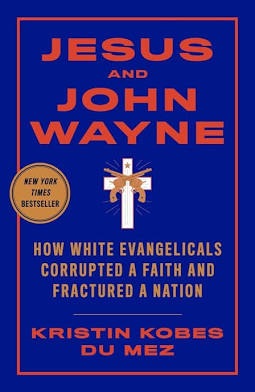
  • Book Review: Jesus and John Wayne by Kristin Kobes Du Mez

    How Evangelicalism’s Manly Messiah Broke the Church and Hijacked the Nation

    Some books don’t just critique a movement—they disassemble it, brick by brick. Jesus and John Wayne does exactly that, and it does it with the kind of precision that leaves scorch marks.

    Kristin Kobes Du Mez isn’t writing to stir up controversy. She’s writing because the facts demand it. This book pulls back the curtain on white evangelicalism’s obsession with militant masculinity—and shows how it reshaped not only the church, but the soul of American politics.

    Sound dramatic? Good. It is. Because what Du Mez outlines here isn’t just a shift in doctrine—it’s a decades-long transformation of evangelical identity, one that ditched the Jesus of the Gospels and replaced him with a Marlboro Man holding a Bible in one hand and an AR-15 in the other.

    Let’s get into it.

    The Premise: Jesus as Warrior King, Not Prince of Peace

    The core argument of Jesus and John Wayne is simple, yet explosive: for over 75 years, white evangelicals in America have been crafting a version of Christianity centered around aggressive, authoritarian masculinity. And it didn’t happen by accident—it was by design.

    This isn’t a book about Trump, but the Trump era is the natural destination of the evangelical train Du Mez tracks from the 1940s forward. By the time evangelicals threw their support behind him in 2016, the groundwork was already there: a theology of dominance, a suspicion of outsiders, and a yearning for a strongman savior—not a servant king.

    The History: From Billy Graham to “Real Men Love Guns”

    What makes Du Mez’s approach so compelling is how deeply she dives into the culture of evangelicalism—not just the theology.

    She traces how figures like Billy Graham, James Dobson, and John Eldredge didn’t just preach Jesus—they preached an ideal of manhood rooted in control, toughness, and power. She connects the dots from books like Wild at Heart to popular Christian radio, from Focus on the Family broadcasts to the rise of Promise Keepers and Christian men’s conferences where weepy repentance was replaced with battle cries.

    One fascinating section covers the Cold War era, when evangelicals tied anti-communism, Christian nationalism, and patriarchal family structures into one unified identity. It wasn’t enough to be a believer—you had to be a warrior. And warriors don’t do nuance. They don’t tolerate dissent. They lead, they conquer, and they don’t say sorry.

    The irony, of course, is thick: the more evangelicals claimed they were defending Christian values, the further they moved from the teachings of Jesus.

    The Title: Why John Wayne?

    The title isn’t just clever—it’s the entire thesis.

    John Wayne, Hollywood’s iconic gunslinger, wasn’t a Christian icon. He was a swaggering symbol of American masculinity. But for evangelicals disillusioned with “soft” versions of Jesus—the gentle shepherd, the peacemaker—Wayne became a stand-in for the kind of man they thought could save the culture.

    Du Mez shows how Wayne’s persona was mythologized in evangelical circles. He represented control, power, and most importantly, victory. That’s the Jesus many white evangelicals came to crave—not a savior who washed feet, but a leader who crushed enemies.

    Toxic Masculinity Meets the Pulpit

    One of the book’s most blistering insights is how evangelical teachings on gender fed abuse, silenced women, and enabled systemic cover-ups.

    Du Mez doesn’t speculate. She documents.

    From Mark Driscoll’s hyper-masculine Mars Hill sermons to the Southern Baptist Convention’s long history of dismissing abuse claims, she shows how this culture rewards the loudest man in the room—and punishes anyone who challenges his authority.

    These aren’t fringe examples. They’re mainstream. The same men who preached family values often ruled their homes with fear and treated women as footnotes. And when scandals erupted, institutions closed ranks, citing “biblical authority” to shield abusers.

    It’s hard to read. But it’s necessary. Because without facing this rot head-on, there’s no way forward.

    Politics, Power, and the Long Road to Trump

    If you’re wondering how 81% of white evangelicals justified voting for a thrice-married casino mogul who bragged about sexual assault, Du Mez has your answer.

    And it has nothing to do with a moral lapse. It was a logical conclusion.

    She shows how evangelicals spent decades celebrating strongmen—from Oliver North to Ronald Reagan—while cultivating a narrative of cultural victimhood. They didn’t want a moral leader. They wanted a fighter.

    By the time Trump came along, they were primed. His bravado, his disdain for “political correctness,” and his promise to “defend Christianity” made him the perfect vessel for a movement built on fear and dominance.

    Trump didn’t corrupt evangelicalism. He revealed what it had already become.

    What Makes This Book So Effective

    A few things elevate Jesus and John Wayne above most cultural critiques:

    1. It’s impeccably researched.

    Du Mez is a historian, and she brings receipts. This isn’t a Twitter thread. It’s backed by decades of documentation, interviews, and published material from within the evangelical world.

    2. It connects culture and theology.

    She doesn’t reduce everything to politics. She shows how everyday things—books, movies, sermons, Christian radio—shaped an entire generation’s view of God and gender.

    3. It’s fair, but not soft.

    This isn’t a hit piece. Du Mez doesn’t mock or sneer. But she’s not gentle either. When something is harmful, she calls it out—with clarity, not cruelty.

    Where It Might Lose Some Readers

    It’s worth noting that if you’re deeply embedded in evangelical culture—or emotionally attached to some of the figures she critiques—you might feel defensive.

    And while Du Mez avoids polemics, she doesn’t balance every criticism with a “not all evangelicals” disclaimer. She’s not writing to appease. She’s writing to confront.

    If you’re ready for that, this book is transformative. If you’re not, it may feel threatening.

    Why It Matters Now More Than Ever

    The evangelical movement Du Mez describes isn’t a relic of the past. It’s still shaping public policy, influencing elections, and dictating how millions of Americans view morality, gender, and power.

    As Christian nationalism surges and the lines between religion and state blur further, this book becomes less a history lesson and more a warning flare.

    Understanding how we got here—why faith became a weapon, why masculinity turned militarized—is the first step toward disentangling Christianity from the political machine it’s been yoked to.

    And for anyone trying to reclaim a faith rooted in humility, service, and justice, this book is essential reading.

    Favorite Quotes

    “Evangelicals did not simply embrace a warrior Christ; they also fashioned him in their own image.”

    “The values that shaped evangelicals’ political engagement were family values, yes—but only if by ‘family values’ one meant the affirmation of patriarchal authority and gender difference.”

    “They did not vote for Donald Trump despite their beliefs, but because of them.”

    Each quote is like a glass of ice water in the face. Chilling. Jarring. Necessary.

    Who Should Read This

    • Churchgoers questioning the dissonance between Christ’s teachings and evangelical politics

    • Recovering evangelicals looking to make sense of the world they were raised in

    • Sociologists and historians tracking the evolution of American religious identity

    • Anyone wondering how faith, masculinity, and authoritarianism became strange bedfellows

    It’s especially crucial for readers who still believe faith can be a force for good—but know that something has gone badly off course.

    Final Verdict: 9.5/10

    Jesus and John Wayne is not just one of the most important books on modern Christianity—it’s one of the most important books on American identity in the 21st century.

    It’s uncomfortable, yes. But necessary. It exposes not only how evangelical culture shaped politics—but how it shaped hearts, families, churches, and imaginations.

    And if that doesn’t deserve a serious reckoning, what does?

    Listen to Jesus and John Wayne FREE on Audible

    Disclosure: This post contains affiliate links. If you sign up for a free Audible trial or make a purchase through these links, I may earn a small commission at no extra cost to you. This helps support my work and allows me to keep providing book recommendations. Thank you for your support!

    Let’s talk: If you grew up evangelical, did this book reflect what you experienced—or did it surprise you? What do you think the future holds for American Christianity? I’d love to hear your thoughts.

  • Money, Lies, and God by Katherine Stewart — When Religion Becomes a Weapon

    Let’s cut straight to it—Money, Lies, and God is not a comforting read. It doesn’t gently walk you through the politics of faith. It yanks the curtain wide open and makes you stare down the machine grinding away beneath America’s holier-than-thou surface. Katherine Stewart’s latest work isn’t just a book—it’s a wake-up call, and it’s aimed right at the heart of anyone still believing the threat to democracy is just a passing storm.

    It’s not.

    And she proves it—meticulously, relentlessly, and without a trace of melodrama.

    Who is Katherine Stewart?

    Before diving into the meat of it, let’s talk about the author. Katherine Stewart isn’t some fringe activist with a chip on her shoulder. She’s a journalist with over a decade of research behind her on the rise of religious nationalism. Her earlier book, The Power Worshippers, was a New York Times Notable Book and a blunt, powerful entry point into this conversation.

    But Money, Lies, and God? This one takes it further.

    It traces how extremist religious ideologies—fueled by billionaires and weaponized through misinformation—have embedded themselves into the very architecture of American political power. And it’s not a conspiracy theory. It’s a thoroughly sourced, extensively documented, and unflinchingly real story of how democracy is being methodically dismantled in the name of God.

    What the Book Is About (And What It Isn’t)

    Let’s get something straight right away: this book is not an attack on religion. It’s an exposé on how religion is being manipulated.

    Stewart’s central argument is that an authoritarian movement—rooted in Christian nationalism and supercharged by oligarch money—is actively working to replace American democracy with a form of theocracy. This isn’t happening on the fringes. It’s in the courts, state legislatures, school boards, and yes, the GOP’s platform.

    The book follows the money. It follows the message. And it follows the missionaries—not the spiritual kind, but the political operatives using Jesus as a prop while they dismantle civil liberties.

    The Three Forces at Play

    1. Money: The Engine Behind the Culture War

    One of the most chilling revelations Stewart presents is the deep financial backing behind this movement. This isn’t grassroots activism—it’s a top-down, billionaire-funded campaign with surgical precision.

    She details how families like the DeVoses and organizations like the Council for National Policy have spent years building an alternate ecosystem: media outlets, legal firms, think tanks, and “family values” organizations designed to push one agenda—concentrate power under the guise of religious morality.

    These aren’t random donors tossing money at candidates. They’re building infrastructure. They’re building a new America. And they’re playing the long game.

    2. Lies: Disinformation as Divine Truth

    If money is the engine, lies are the fuel.

    The book explains how right-wing media, social media echo chambers, and even church bulletins have become conduits for propaganda. Stewart walks us through how coordinated messaging—framed as spiritual guidance—spreads misinformation at a speed that fact-checkers can’t touch.

    Election lies. Vaccine lies. LGBTQ+ lies. Anti-education lies.

    And here’s the scary part: for many followers, these lies aren’t just politics—they’re theology.

    3. God: Faith Hijacked for Authoritarian Ends

    This is the core of Stewart’s thesis: Christian nationalism isn’t about religion—it’s about power.

    She documents how religious belief has been replaced with a political identity. Faith has become a weapon, used to justify everything from voter suppression to reproductive control to white supremacy.

    Pastors are encouraged to preach political messages. Christian schools are turning into ideological training grounds. And increasingly, politicians are invoking divine authority to justify laws that erode civil rights.

    It’s not just “God and country.” It’s God instead of country.

    What Stands Out

    Stewart Doesn’t Flinch

    There’s a temptation, when writing about religion, to tiptoe. Stewart doesn’t. She makes it clear that this movement isn’t about spirituality—it’s about domination. She calls out the architects by name, cites court decisions, and lays bare how these groups use religious rhetoric to mask raw political ambition.

    She Separates Faith from Fanaticism

    This is critical. Stewart consistently reminds readers that the movement she’s exposing does not represent all Christians. In fact, many Christians are fighting against it. She’s not attacking belief. She’s warning us about belief being corrupted for political gain.

    The Research Is Rock-Solid

    Stewart’s journalism background shows. Her sources are thorough, her footnotes dense but digestible, and her case studies incredibly well-chosen. She’s not speculating—she’s connecting the dots most of us have been too overwhelmed to see.

    Where the Book Is Challenging

    This book is intense.

    It’s not a light read. It’s not a Sunday-morning-with-coffee kind of book. There are moments when the sheer scale of the project—the money, the legal tactics, the cultural manipulation—feels overwhelming.

    There’s also a chance that readers unfamiliar with the players and institutions she references (Alliance Defending Freedom, the CNP, ALEC, etc.) may need to pause and Google as they go. But that’s less a flaw in the writing and more a symptom of just how complex this machine has become.

    A Personal Reaction

    Reading this book was like having someone switch on the floodlights in a room you didn’t know you were sitting in.

    There’s a chapter where Stewart explains how “religious liberty” has been weaponized as a legal strategy to carve out theocratic enclaves inside American law—places where anti-discrimination laws don’t apply if you claim religious objection. That one stuck with me.

    Why? Because I’ve heard people I love—smart, good people—say, “But religious freedom is a good thing!” Of course it is. But not when it’s being twisted to strip others of their freedoms.

    Money, Lies, and God doesn’t just give you new information—it reframes what you thought you already understood. That’s rare. And powerful.

    Who Should Read This?

    • Concerned voters. If you’re worried about the state of democracy but don’t know what’s fueling the chaos—this is your book.

    • Religious moderates and progressives. Stewart gives voice to Christians who feel their faith is being misused—and arms them with knowledge to push back.

    • Teachers, journalists, and organizers. This is essential context for anyone working in public life or civic education.

    • Skeptics and fence-sitters. It might not change minds overnight, but it will challenge anyone who still thinks this is just “partisan noise.”

    What It Adds to the National Conversation

    One of the most vital contributions of this book is its clarity. It helps explain how we got here—and why things feel so off.

    We didn’t just “drift” toward extremism. A powerful coalition built this moment. They wrote the laws, bankrolled the candidates, trained the judges, and rewired the culture. Stewart isn’t asking us to imagine a dystopian future. She’s showing us the present—one that millions of Americans are already living in.

    Final Verdict

    If I had to sum this book up in one sentence, it would be this:

    Money, Lies, and God is not about religion—it’s about power disguised as religion, and what happens when we stop questioning who holds it.

    It’s urgent. It’s clear. It’s necessary.

    Don’t read it for comfort. Read it because you need to know what’s happening behind the curtain. Read it because this movement isn’t slowing down. Read it because democracy doesn’t defend itself—and the people trying to dismantle it are counting on your silence.

    Want to hear it instead?

    You can listen to Money, Lies, and God for free on Audible with a trial membership.

    Disclosure: This post contains affiliate links. If you sign up for a free Audible trial or make a purchase through these links, I may earn a small commission at no extra cost to you. This helps support my work and allows me to keep providing book recommendations. Thank you for your support!

    What do you think?

    Have you seen signs of Christian nationalism in your own community or workplace?

    Do you believe this movement can be stopped—or are we too far gone?

    Let’s talk about it in the comments.